DGR2026

Business systems

We do not only build apps — we digitalise how companies work day to day. This page describes one real deployment: a retail group whose operations moved onto digital systems end to end.

The client is not named here. The systems are real and running today.

The flow

Spend approval platform

Every expense — from purchase request to payment — moves through one transparent process.

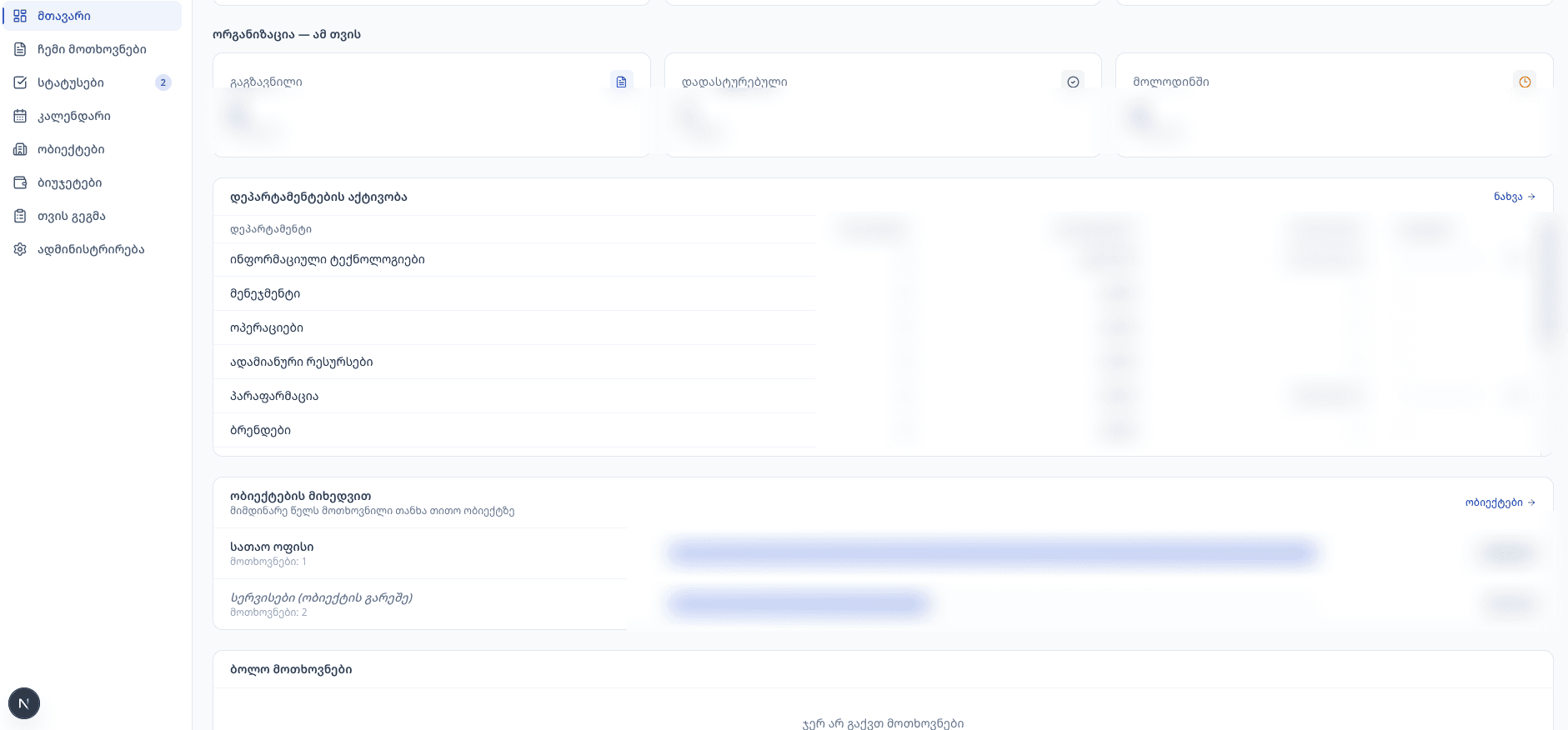
The management platform: a purchase request with its three-step approval chain and the month's budget figures.
  1. 01

    The request

    An employee raises a purchase request — invoice, amount, and the date they need it paid.

  2. 02

    The chain

    The system builds the approval route itself — by department, amount threshold and brand. Who signs off stops being a question.

  3. 03

    Approval

    The request moves step by step from managers to accounting. Each step keeps its author and its timestamp.

  4. 04

    Paid

    Accounting closes the cycle. The payment keeps a history, an owner and a trail.

Before

All of this lived in spreadsheets, emails and verbal agreements.

Now

One bilingual system where every amount has a history, an owner and a trail.

What the flow stands on

The monthly budget

Each department plans its month ahead, curators approve it, and requests attach to those approved codes. Plan against actual is visible any day of the month, not only at the end of it.

The payment calendar

Finance sees what is due, when, and in which currency — in one view, with the lari equivalent at the National Bank rate.

Insight

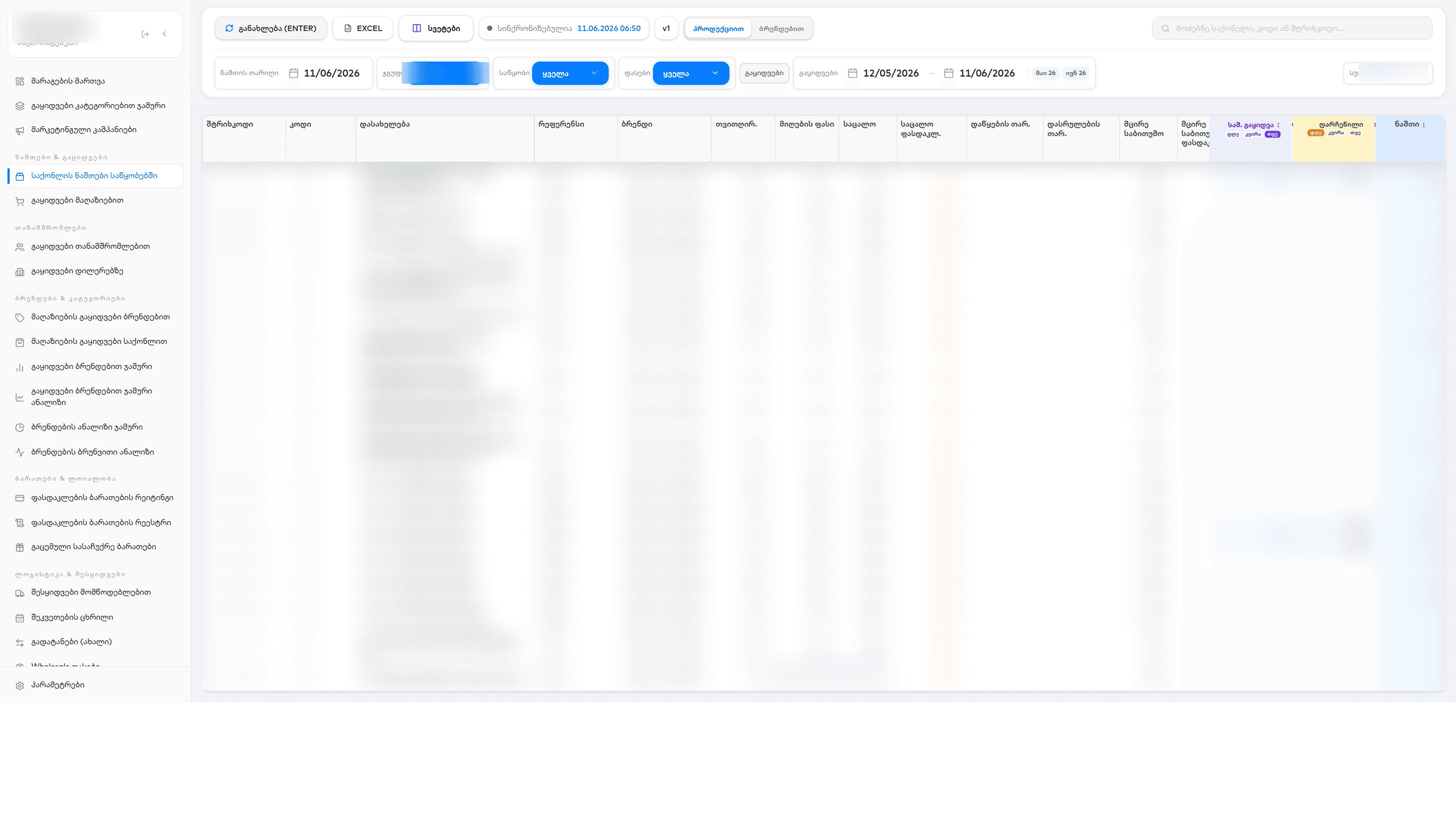
The analytics dashboard: turnover, transactions, a daily sales chart and top categories.

Analytics centre

The leadership reporting centre, built on top of the company's existing accounting system.

  • Sales, stock and company-wide dashboards
  • Permissions down to the tab — who sees what
  • An AI analytics chat over the data
  • Heavy views are precomputed so the source system is left alone
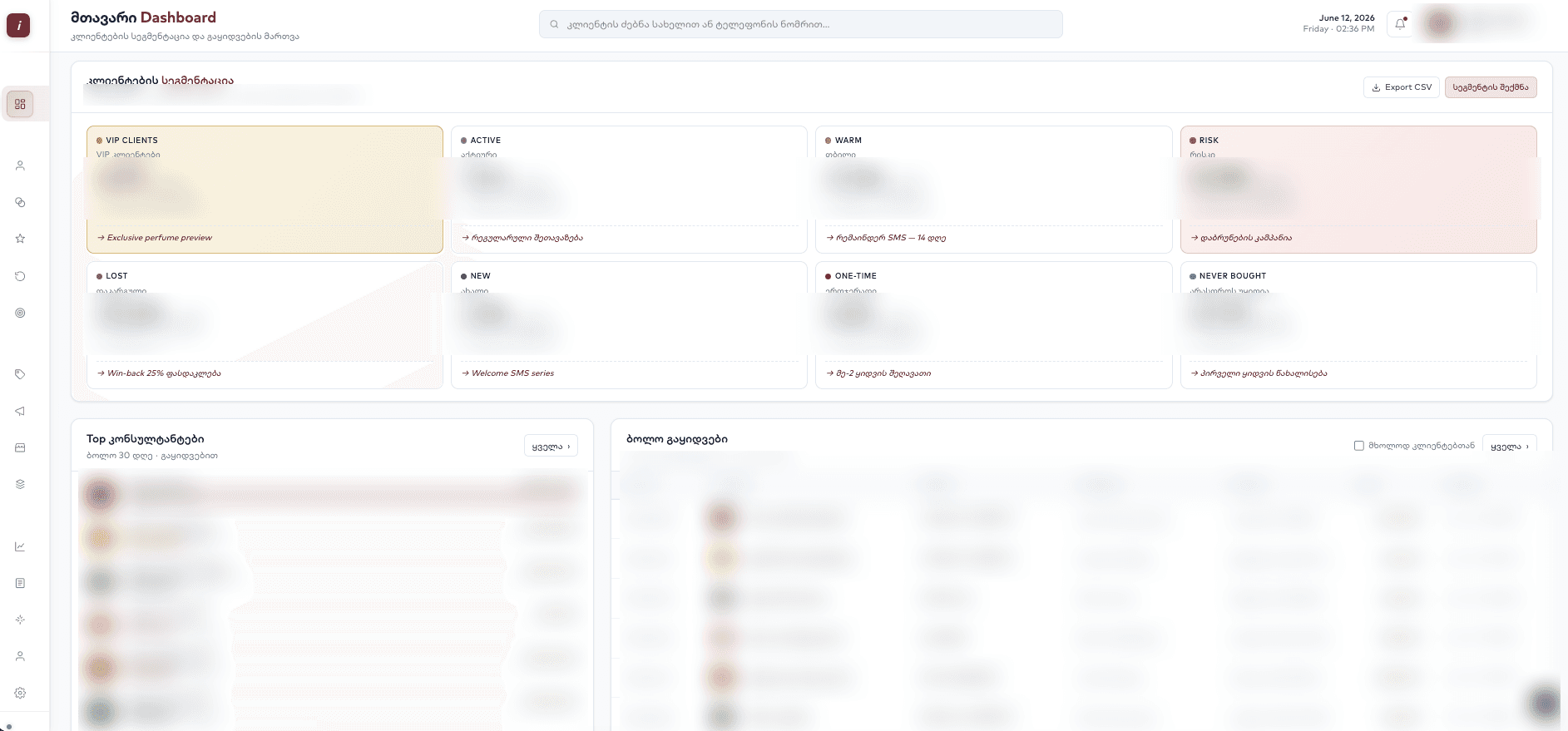
The CRM: an SMS campaign alongside customer segments and their sizes.

Marketing CRM

Customer base, segmentation and campaigns — two brands in one system.

  • Customer base with loyalty cards
  • Segmentation, offers and promotions
  • Real SMS campaign delivery through the operator
  • Per-store analytics and insights written in Georgian
  • A built-in handbook — training lives inside the system

Staff and office

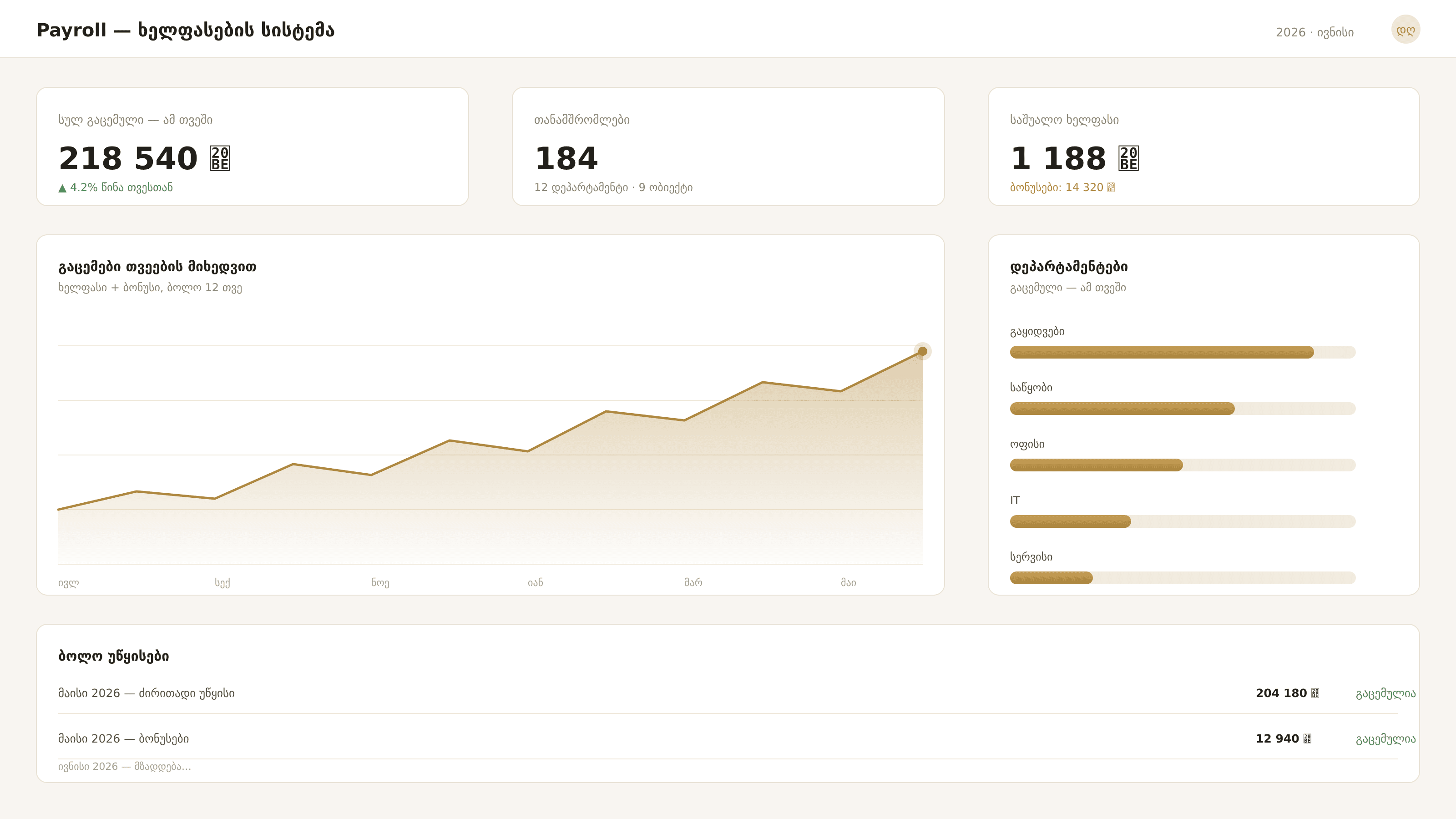
The bonus table: target, actual, attainment and the calculated bonus per employee.

Payroll bonuses

Bonus calculation on the managers' own formulas — accurate to the tetri.

  • Employees pulled straight from the HRMS
  • Formulas built on store targets and sales commissions
  • Sensitive data isolated from the shared database
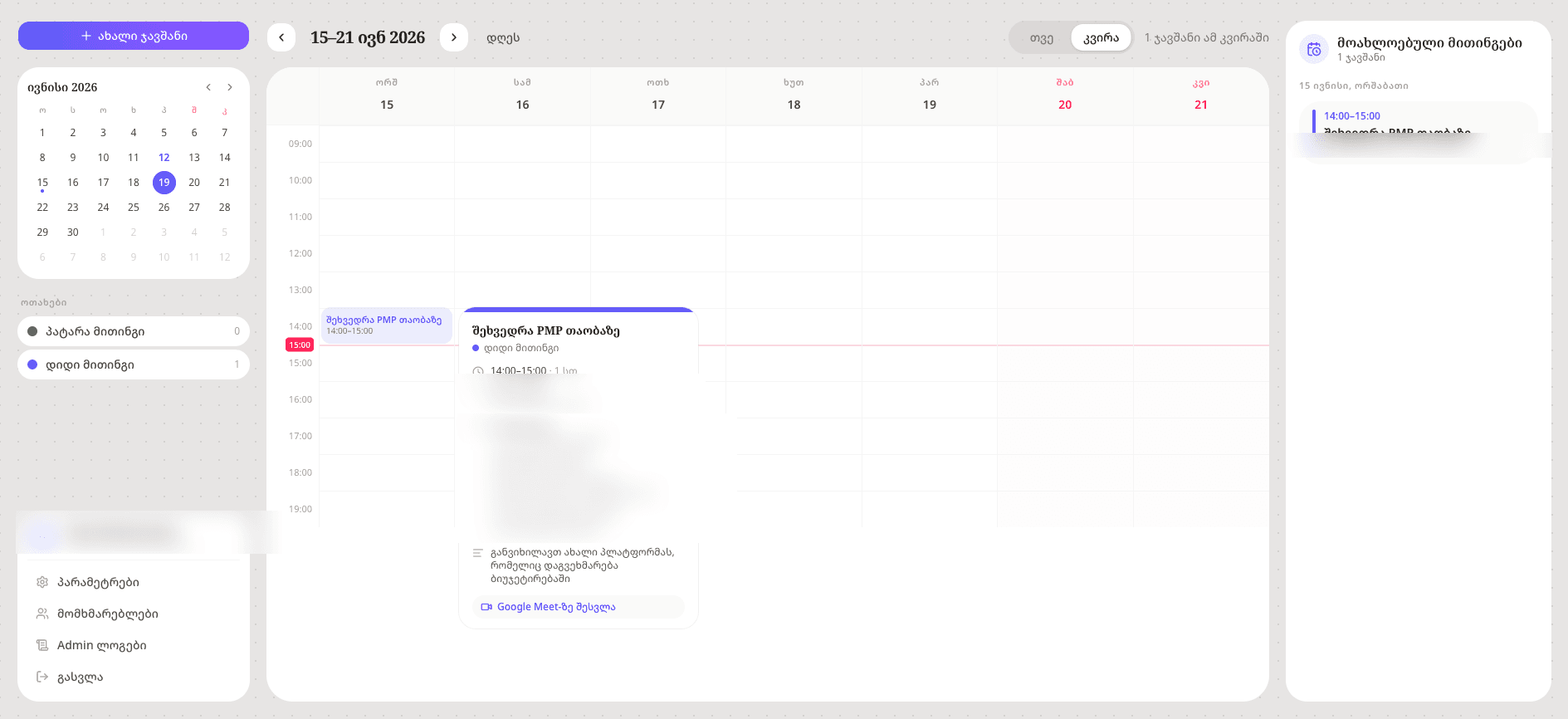
The meeting-room week: colour-coded bookings, with private meetings shown as grey blocks — the time is visible, the title is not.

Meeting rooms

Room booking on a calendar — a small tool that gets used ten times a day.

  • One view of what is free and what is taken
  • Titles of private meetings stay hidden from everyone else

On the floor

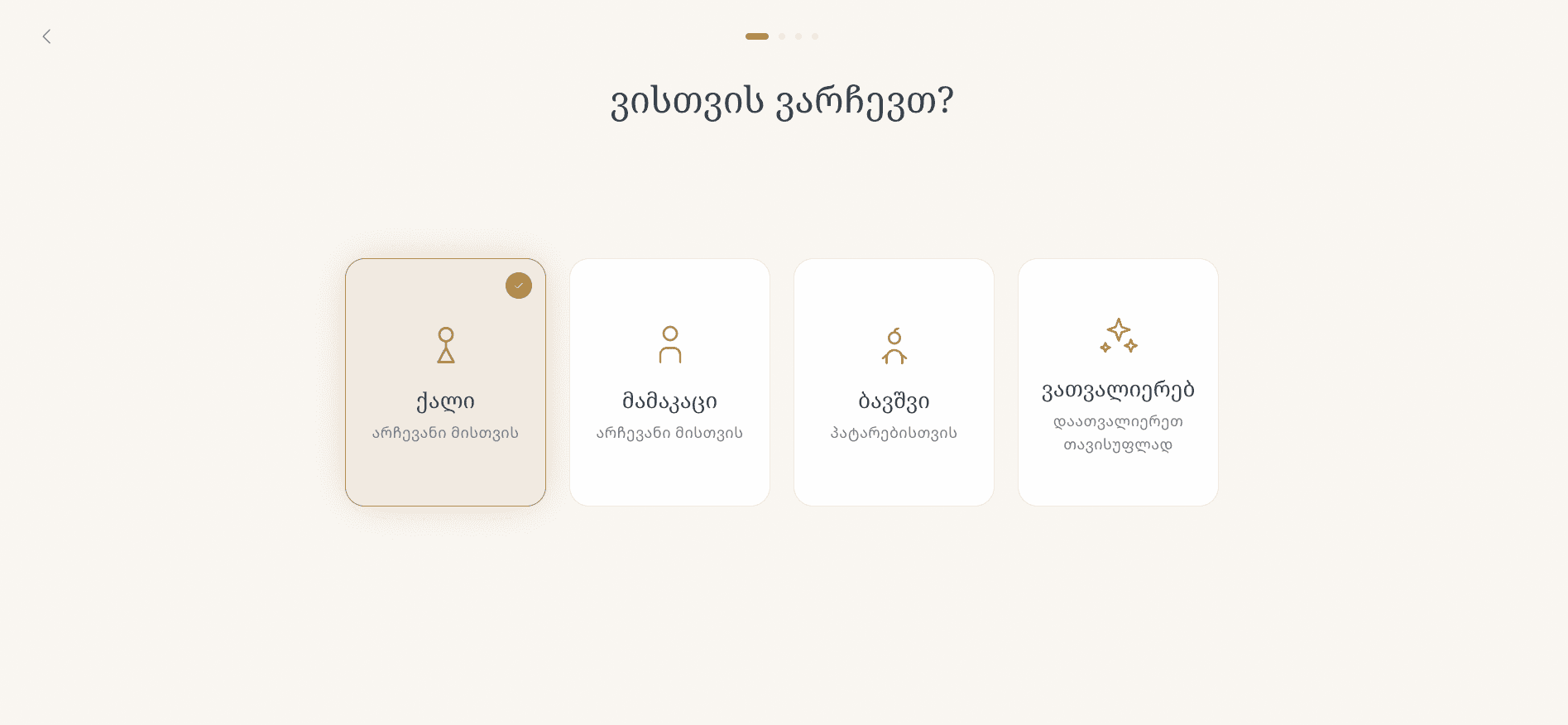
The kiosk advisor: narrowing the choice by asking, then offering fragrances that are in stock.

In-store AI kiosk

A screen on the shop floor that helps a customer choose a fragrance.

  • Talks with the customer and narrows the choice by asking
  • Only ever suggests what is actually in stock
  • Respects the discount rules in force
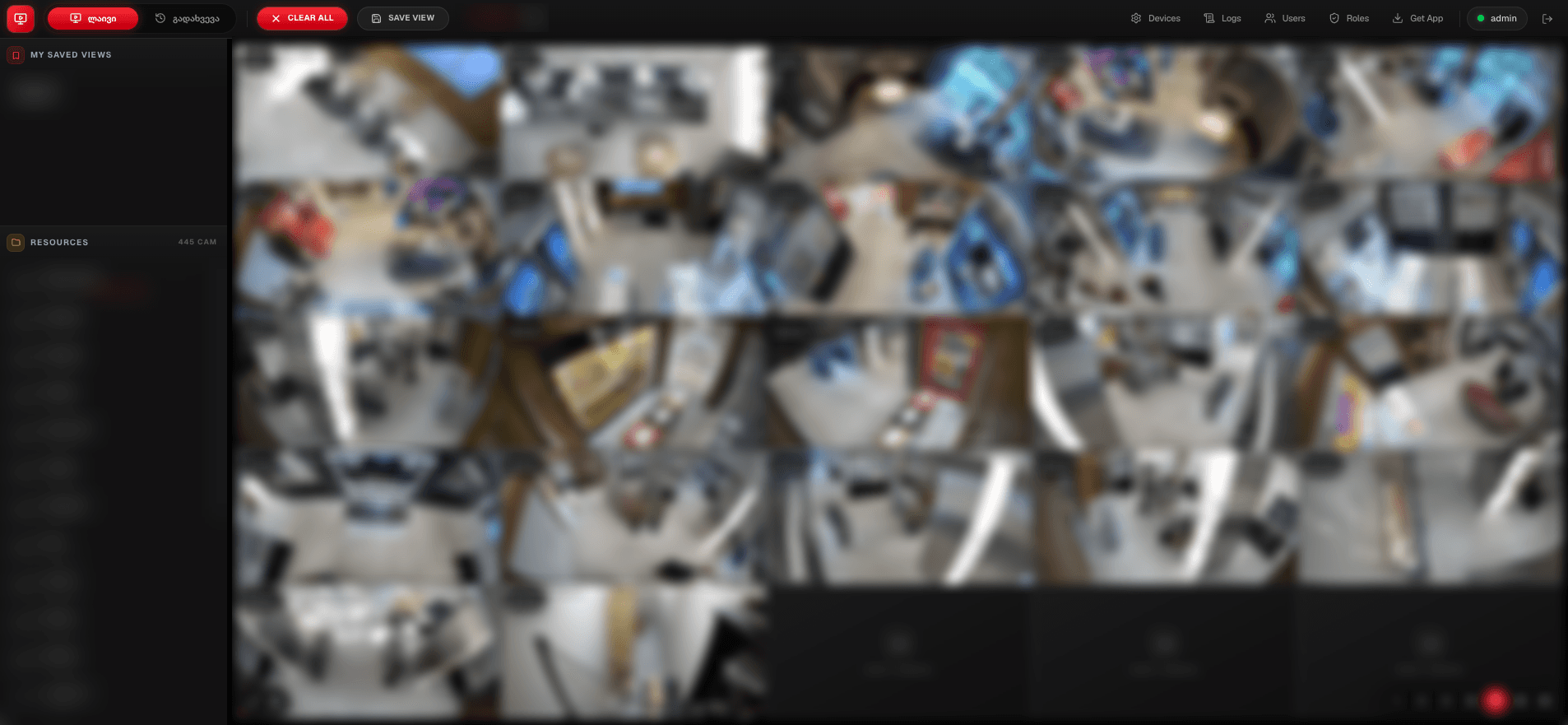
The surveillance panel: locations with their online camera counts, a view switcher, a recent-events log, and one branch locked by role.

Video surveillance panel

Live camera feeds from the stores in a browser, with nothing to install.

  • One panel across every location
  • Access limited by permission

What they all share

Seven systems written for different departments, built on one set of rules.

Bilingual, always
Every system works in Georgian and in English — translation is not a layer glued on afterwards.
Permissions, not trust
Who sees what and who approves what is written into the system, not into an understanding.
We connect, we don't replace
The accounting system, the HRMS, the SMS operator — what already works stays. We connect to it.
Isolation where it matters
Payroll data does not touch the shared database. A fault in one system is not a fault in the next.

Is there a process in your company that lives in a spreadsheet?

Write to us — we start by understanding how it works today.